
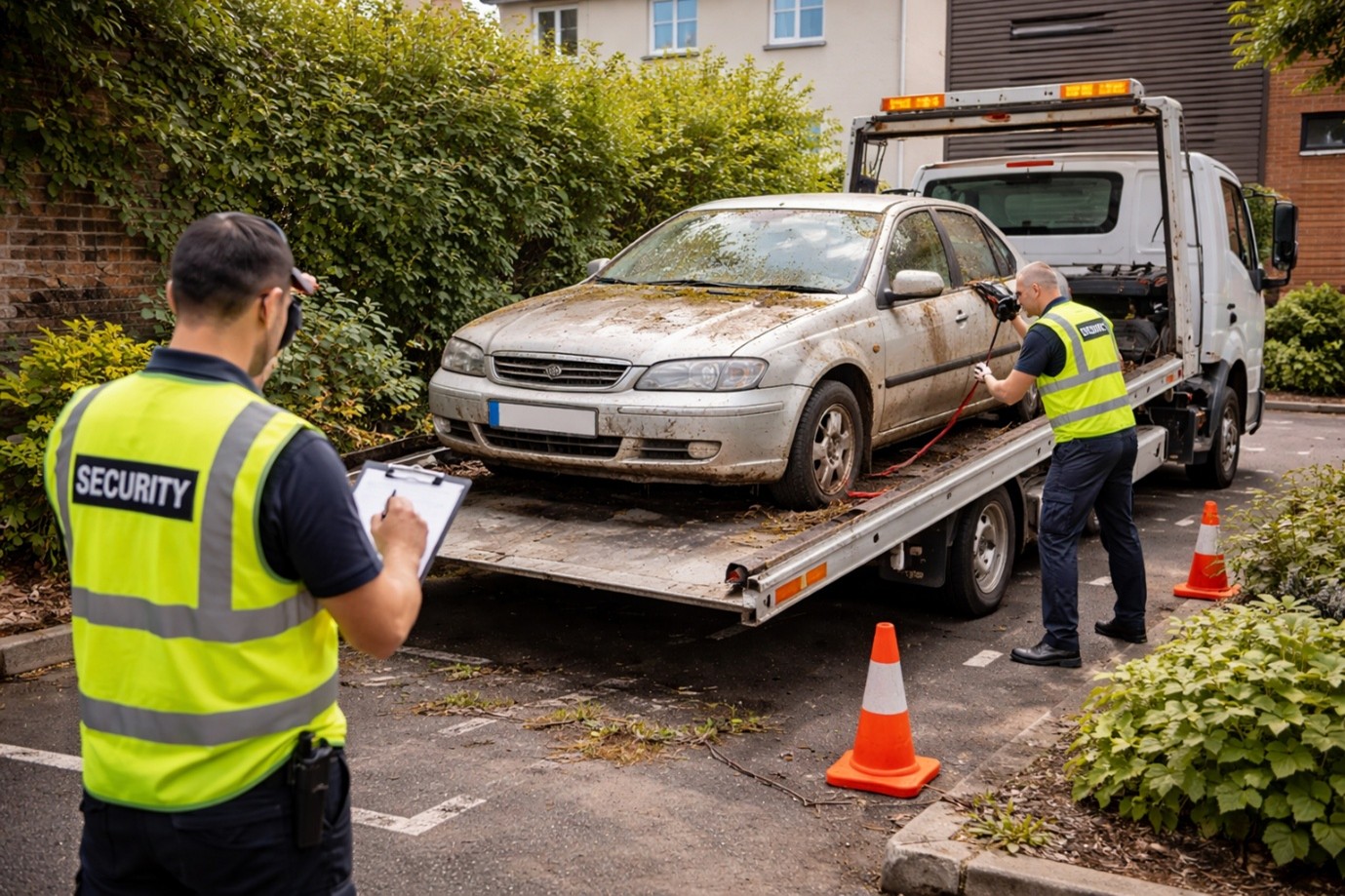
Abandoned vehicles on private land are more than just an inconvenience for landlords.
They can attract antisocial behaviour, reduce kerb appeal, create safety hazards, and even expose property owners to legal complications if handled incorrectly.
Whether the vehicle is left in a car park, outside a block of flats, or on unused land, dealing with it promptly and lawfully is essential.
Understanding the correct process helps landlords protect their property, avoid disputes, and restore the space to safe and proper use.
Why Abandoned Vehicles Are a Serious Issue for Landlords
An unattended vehicle can quickly become a magnet for vandalism, fly tipping, or unauthorised use.
Over time, it may leak fluids, obstruct access, or create fire and environmental risks. For rental properties, this can negatively affect tenants’ satisfaction and damage the reputation of the site.
From a legal perspective, removing a vehicle without following the correct procedure can result in claims of unlawful interference. This is why landlords must balance swift action with compliance.
What Counts as an Abandoned Vehicle on Private Land
A vehicle may be considered abandoned if it has been left without permission, shows signs of neglect, lacks valid tax, or has clearly not been moved for a prolonged period. However, appearance alone is not always enough to justify removal.
Landlords should record key details such as:
- Vehicle registration and condition
- Length of time it has remained stationary
- Any attempts made to identify or contact the owner
This documentation is vital should the removal later be challenged.
Legal Responsibilities and Correct Procedure
Private landowners do not have the same powers as local authorities, which makes following the right process crucial.
In most cases, reasonable steps must be taken to notify the owner before removal. This may include placing warning notices on the vehicle and allowing sufficient time for a response.
Professional services specialising in Abandoned Vehicle Removal understand these requirements and ensure that all actions are carried out lawfully.
This reduces risk for landlords and avoids costly disputes or delays.
Why Professional Support Is the Safest Option
Attempting to move or dispose of a vehicle independently can lead to legal and financial consequences.
Specialist providers manage the entire process, from initial assessment and owner tracing to compliant removal and disposal.
Working with an experienced organisation such as MEC Security allows landlords to address abandoned vehicles efficiently while staying within the law.
Their knowledge of private land regulations and enforcement procedures ensures problems are resolved with minimal disruption.
Preventing Future Vehicle Abandonment
Once the issue is resolved, preventative measures can help avoid recurrence.
Clear signage, controlled access, regular site inspections, and monitoring of parking areas all discourage unauthorised use. For larger sites, combining vehicle control with wider property security measures is often the most effective approach.
Final Thoughts
Abandoned vehicles can undermine safety, appearance, and tenant confidence if not handled correctly.
By understanding legal obligations and using professional support, landlords can resolve the issue quickly and responsibly.
Taking a structured, compliant approach to abandoned vehicle removal protects both the property and the landlord, ensuring private land remains secure, accessible, and well maintained.